

Emotional intelligence influences how we respond to stress, communicate with others and make everyday decisions. While intelligence is often associated with problem-solving or academic ability, emotional intelligence is about understanding emotions, both our own and those of the people around us and using that awareness to respond thoughtfully rather than react impulsively.
Although the concept was first introduced by psychologists Peter Salovey and John Mayer in 1990, it gained worldwide attention after science journalist and psychologist Daniel Goleman published Emotional Intelligence in 1995. Today, decades of research, including work from the Yale Center for Emotional Intelligence, shows that emotional intelligence is not a fixed personality trait but a set of skills that can be developed throughout life.
In this guide, you’ll learn what emotional intelligence means, why it matters, the five key components, real-life examples and practical ways to strengthen it in your daily life.
Table of Contents
What Is Emotional Intelligence?
Emotional intelligence is the ability to recognize, understand and manage your own emotions while also understanding and responding effectively to the emotions of others. Rather than ignoring feelings or being controlled by them, emotional intelligence helps you use emotions as valuable information to guide your thoughts, decisions and relationships.
The term emotional intelligence was first introduced by psychologists Peter Salovey and John Mayer in 1990. They described it as a set of mental abilities that helps people perceive emotions accurately, understand what emotions mean, use emotions to support thinking and regulate emotions in healthy ways. This ability-based model remains one of the most influential scientific frameworks for emotional intelligence today.
Source: APA Dictionary of Psychology; Mayer & Salovey’s ability model.
A few years later, psychologist and science journalist Daniel Goleman brought the concept into mainstream awareness through his bestselling book Emotional Intelligence (1995). Goleman expanded the discussion beyond psychology, showing how emotional intelligence influences leadership, relationships, communication and personal success. His work helped shift public understanding of intelligence from being measured solely by IQ to also recognizing the importance of emotional skills.
Today, institutions such as the Yale Center for Emotional Intelligence continue to build on this research. Their work emphasizes that emotional intelligence is not an inborn personality trait but a collection of learnable skills that can be strengthened through awareness, practice and reflection. This means that regardless of where you begin, emotional intelligence can continue to develop throughout your life.
Why Emotional Intelligence Matters
Emotional intelligence shapes the way we experience everyday life. It influences how we respond to challenges, communicate with others and make decisions under pressure. While technical knowledge and IQ may help solve problems, emotional intelligence helps us navigate the emotions that often accompany those problems.
Research over the past three decades has shown that emotional intelligence is linked to healthier relationships, more effective leadership and better teamwork. Rather than reacting impulsively, emotionally intelligent people are more likely to pause, consider different perspectives and choose responses that align with their values. These skills become especially important during conflict, change or stressful situations, where emotions can easily influence behaviour.
At the Yale Center for Emotional Intelligence, researchers describe emotions as valuable sources of information rather than obstacles to overcome. Their work suggests that understanding and regulating emotions can improve learning, decision-making, well-being and the quality of our relationships. Instead of trying to suppress difficult emotions, emotional intelligence encourages us to recognize them, understand their message and respond with intention.
Daniel Goleman’s work also highlights that emotional intelligence extends far beyond personal awareness. It affects how we motivate ourselves, empathize with others and build meaningful connections. Whether you’re working with colleagues, supporting a friend or making an important life decision, emotional intelligence helps create thoughtful responses instead of automatic reactions.
The encouraging part is that these abilities are not reserved for a select few. Just like learning a new language or strengthening a muscle, emotional intelligence develops through consistent practice. Small habits such as noticing your emotions, listening without judgment and reflecting before reacting can gradually improve how you understand yourself and relate to others.
Daniel Goleman’s framework offers one of the clearest answers by breaking emotional intelligence into five core components that work together. Understanding these components provides a practical roadmap for developing greater emotional awareness and stronger relationships.
The Five Pillars of Emotional Intelligence
According to Daniel Goleman’s framework, emotional intelligence is built on five interconnected skills that influence how we understand ourselves and interact with others.
🪞 Self-Awareness
Recognizing your emotions and understanding their impact.
🌿 Self-Regulation
Managing emotions rather than reacting impulsively.
🎯 Motivation
Staying focused on meaningful goals despite setbacks.
🤝 Empathy
Understanding how other people feel.
💬 Social Skills
Building healthy relationships through communication.
Emotional Intelligence Examples in Everyday Life
Understanding the emotional intelligence meaning becomes much easier when you see it in action. Emotional intelligence isn’t about staying calm all the time or never experiencing difficult emotions. Instead, it’s about recognizing what you’re feeling, understanding why you’re feeling that way and choosing how to respond rather than reacting automatically.
Below are some emotional intelligence examples that show how small changes in awareness can lead to healthier interactions and better decisions.
Receiving Criticism
Imagine your manager points out a mistake in your work. A reactive response might be to become defensive, make excuses or immediately blame external circumstances.
An emotionally intelligent response is different. You notice your initial frustration, take a moment to process it and listen to the feedback before responding. Even if the criticism feels uncomfortable, you focus on what you can learn from the situation rather than viewing it as a personal attack.
During a Disagreement
A disagreement with a partner, friend or colleague can quickly become emotional. Without emotional awareness, conversations often turn into arguments where each person is trying to prove they’re right.
Someone with emotional intelligence is more likely to pause, listen carefully and try to understand the other person’s perspective before responding. This doesn’t mean agreeing with everything—it means making space for understanding before reacting.
Managing Stress
Stress affects everyone, but our responses can vary greatly. After a long day, one person may snap at family members or make impulsive decisions without realizing how overwhelmed they feel.
Someone with stronger emotional intelligence is more likely to recognize the signs of stress early. Instead of reacting automatically, they might take a short walk, practise slow breathing or delay an important decision until they feel calmer. This ability to regulate emotions is one of the most valuable emotional skills we can develop.
Celebrating Success
Emotional intelligence isn’t only about handling difficult emotions, it also shapes how we respond to positive experiences.
For example, after achieving a promotion or completing an important project, an emotionally intelligent person celebrates the accomplishment while also acknowledging the support of colleagues, mentors or loved ones. Gratitude and humility strengthen relationships and encourage continued personal growth.
Supporting Someone Else
Suppose a close friend tells you they’re struggling.
Instead of immediately offering advice or trying to “fix” the situation, an emotionally intelligent response begins with listening. You acknowledge their feelings, ask thoughtful questions and offer support without judgment. Often, people need understanding before they need solutions.
Researchers at the Greater Good Science Center have found that empathy and compassionate listening play an important role in building trust and strengthening relationships. Emotional intelligence helps us respond with curiosity and care rather than assumptions or quick judgments.
These emotional intelligence examples show that the skill isn’t reserved for leaders, therapists or public speakers. It’s reflected in everyday choices—how we listen, communicate, manage stress and respond to ourselves and others. The encouraging news is that these behaviours can be learned and strengthened with practice.
How Emotionally Intelligent Are You?
Rate each statement from 1 to 5 based on how often it feels true for you.
1 = Never | 2 = Rarely | 3 = Sometimes | 4 = Often | 5 = Always
This checklist is for personal reflection only and is not a clinical or diagnostic assessment.
8 Ways to Improve Emotional Intelligence
If you’re wondering how to improve emotional intelligence, the answer isn’t to change your personality overnight. Emotional intelligence is built through small, intentional habits that shape how you understand emotions, respond to challenges and connect with others.
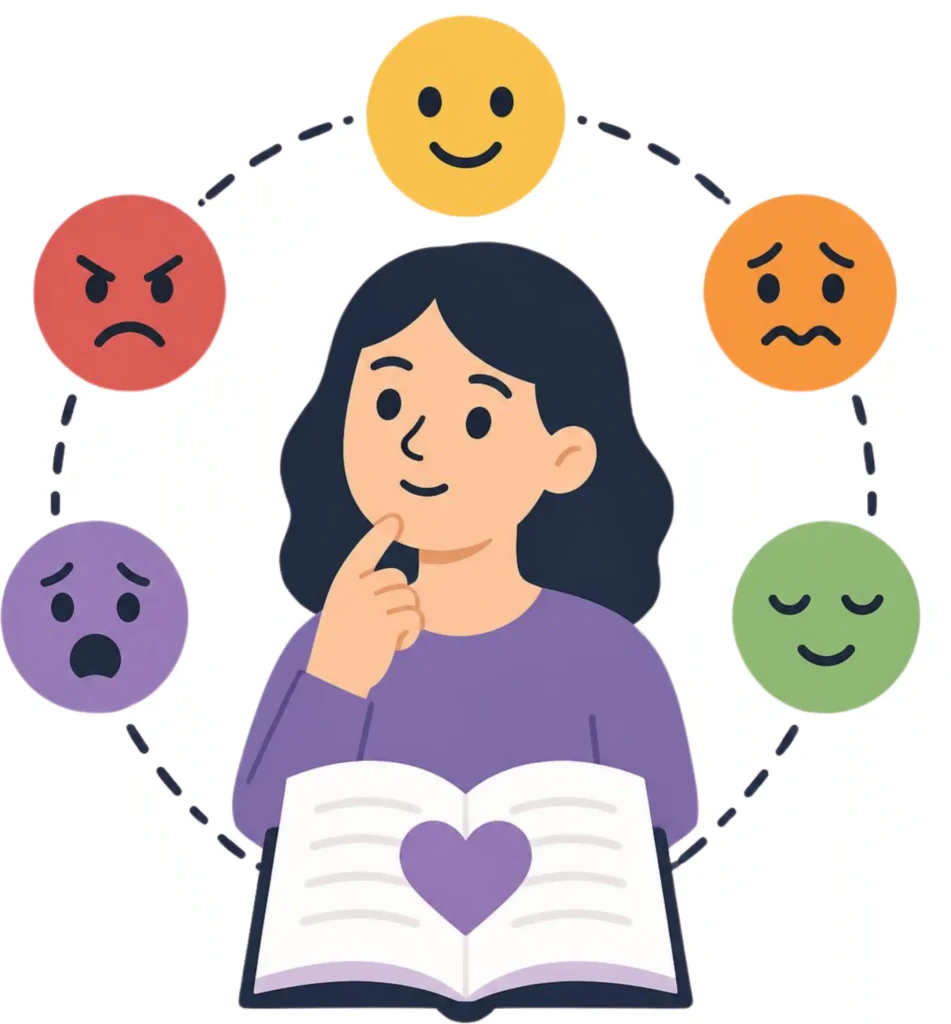
1. Learn to Name Your Emotions
Many of us describe every uncomfortable feeling as simply “stress” or “anger.” In reality, emotions are far more nuanced. You might actually be feeling disappointed, overwhelmed, anxious, embarrassed or discouraged and each emotion calls for a different response.
Researchers at the Yale Center for Emotional Intelligence highlight the importance of accurately labeling emotions, a skill known as emotional granularity. The more precisely you identify what you’re feeling, the easier it becomes to understand why you’re feeling it and decide what to do next.
Try this today:
Instead of saying,
“I’m stressed.”
Ask yourself,
“Am I anxious, overwhelmed, frustrated or disappointed?”
The simple act of naming an emotion often reduces its intensity and increases self-awareness.
2. Create Space Between Emotion and Action
One of the hallmarks of emotional intelligence is recognizing that emotions don’t have to dictate your behaviour.
Daniel Goleman describes self-regulation as the ability to manage emotional impulses rather than being controlled by them. This doesn’t mean suppressing emotions, it means giving yourself enough space to choose your response.
Imagine receiving an email that feels unfair. Your immediate reaction might be to respond defensively. Instead, pause. Take a few slow breaths. Come back to the message after a few minutes.
That brief pause often changes not only what you say, but also how the conversation unfolds.
Try this today: Before reacting to a difficult situation, ask yourself:
“Will this response still feel right tomorrow?”

3. Listen to Understand, Not to Respond
Most people listen while preparing their next sentence. Emotionally intelligent people listen with curiosity.
According to researchers at the Greater Good Science Center at UC Berkeley, empathic listening strengthens trust because it helps people feel genuinely understood rather than judged. When people feel heard, conversations become less defensive and more collaborative.
The next time someone shares a problem, resist the urge to immediately offer advice. Instead, ask:
“Can you tell me more about how that felt?” Sometimes understanding is far more valuable than solving.

4. Reflect on Your Emotional Patterns
Self-awareness doesn’t develop only in the moment, it also grows through reflection.
The American Psychological Association describes emotional intelligence as involving the ability to perceive, understand and regulate emotions. Reflection helps strengthen all three of these abilities by allowing you to notice recurring emotional patterns.
You might discover that certain situations consistently trigger frustration, self-doubt or impatience. Once you recognize those patterns, they become easier to manage.
A simple reflection practice:
- What emotion did I experience most today?
- What triggered it?
- How did I respond?
- What would I like to do differently next time?
Five minutes of honest reflection can teach you more than an entire day of reacting on autopilot.
5. Ask for Honest Feedback
We all have blind spots. The way we think we’re communicating isn’t always the way others experience us.
In Harvard Business Review, emotional intelligence is consistently described as one of the defining characteristics of effective leaders. One reason is that emotionally intelligent people actively seek feedback instead of avoiding it. They understand that growth often begins with perspectives they can’t see on their own.
Ask someone you trust: “What’s one thing I do that helps people feel heard?”
Then ask, “What’s one thing I could improve?”
Listen without defending yourself.

6. Practice Perspective-Taking
Empathy isn’t about agreeing with everyone. It’s about understanding that every person experiences the world through a different lens.
The Greater Good Science Center suggests that consciously trying to see a situation from another person’s perspective strengthens empathy and improves relationships.
The next time you disagree with someone, pause before deciding they’re wrong.
Instead, ask yourself: “What experiences might have led them to see things this way?”
That question alone can transform the quality of a conversation.
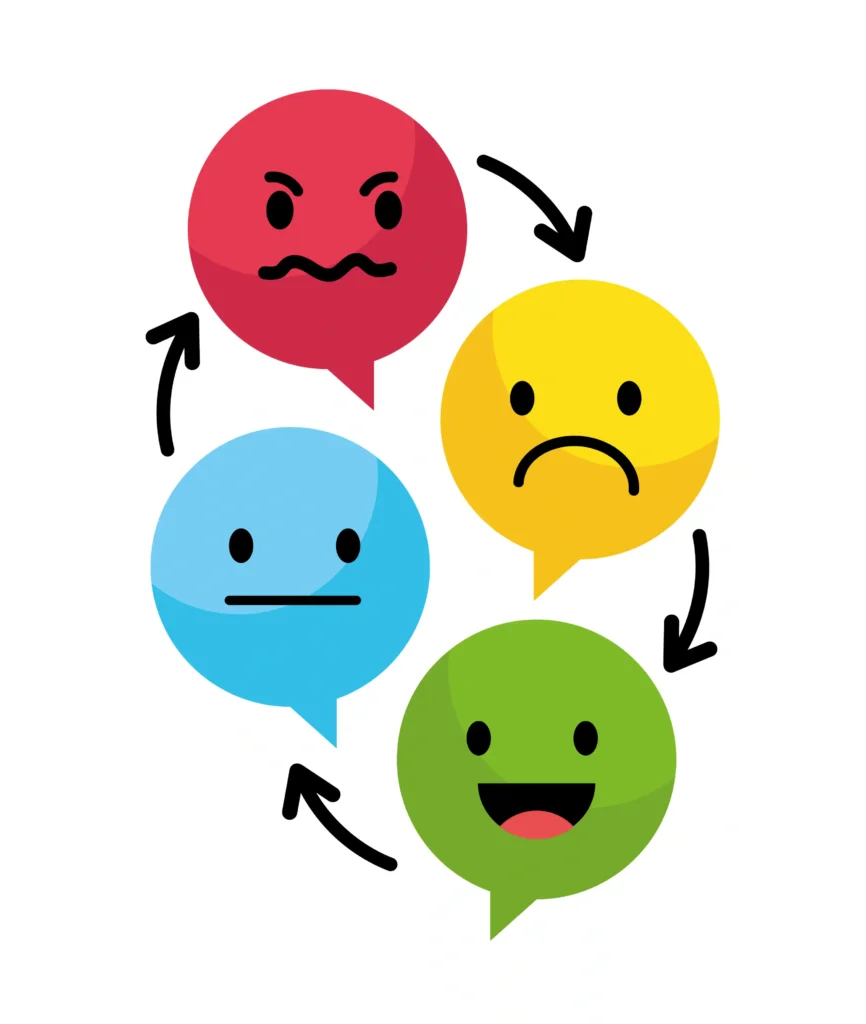
7. Build a Richer Emotional Vocabulary
Children often learn basic emotions like happy, sad or angry. Adults need a much richer vocabulary.
The Yale Center for Emotional Intelligence encourages developing emotional vocabulary because it improves emotional awareness and regulation. Being able to distinguish between irritation, disappointment, guilt, loneliness and disappointment gives your brain more precise information to work with.
Think of it this way: You wouldn’t use one word to describe every colour. Emotions deserve the same level of clarity.

8. Focus on Progress, Not Perfection
Perhaps the biggest misconception about emotional intelligence is that emotionally intelligent people never lose their temper, feel anxious or become frustrated.
They do. The difference is that they notice these emotions sooner, understand what triggered them and recover more intentionally.
Improving emotional intelligence isn’t about becoming emotionally perfect. It’s about becoming emotionally aware. Every disagreement, mistake and difficult conversation is another opportunity to practise.
Over time, those small moments of awareness shape how you think, communicate and build relationships.
Emotional Intelligence Myths: Separating Fact from Fiction
As emotional intelligence has become more widely discussed, it has also become surrounded by misconceptions. Some people believe it means always staying calm, while others assume it’s an inborn talent that can’t be developed. Research tells a different story. Understanding what emotional intelligence is and what it isn’t can help you build these skills with greater confidence.
Myth 1: Emotionally Intelligent People Never Feel Angry or Upset
This is perhaps the most common misconception.
People with high emotional intelligence experience the same range of emotions as everyone else, including anger, frustration, disappointment and anxiety. The difference is in how those emotions are recognised and managed.
Rather than reacting impulsively, emotionally intelligent individuals are more likely to pause, understand what triggered the emotion and choose a response that aligns with their values and the situation.
Myth 2: Emotional Intelligence Means Always Being Nice
Kindness and emotional intelligence are related, but they aren’t the same thing.
Being emotionally intelligent doesn’t mean avoiding conflict or agreeing with everyone. Sometimes it means having an uncomfortable conversation, setting healthy boundaries or saying no with respect and clarity.
Empathy is about understanding another person’s perspective, not sacrificing your own needs or opinions.
Myth 3: You’re Either Born with Emotional Intelligence or You’re Not
Current research strongly challenges this idea.
The Yale Center for Emotional Intelligence describes emotional intelligence as a collection of skills that can be developed through practice and experience. Just as communication or leadership skills improve over time, emotional awareness, empathy and self-regulation can also grow with intentional effort.
Myth 4: High IQ Automatically Means High Emotional Intelligence
Intellectual ability and emotional intelligence measure different aspects of human capability.
A person may be highly analytical or academically gifted while still finding it difficult to manage emotions or navigate relationships. Likewise, someone with average academic performance may excel at understanding people, resolving conflict and building trust.
Rather than competing with one another, IQ and emotional intelligence often complement each other. The strongest decision-makers are usually those who combine logical thinking with emotional awareness.
Myth 5: Emotional Intelligence Is Only Important at Work
While emotional intelligence is frequently discussed in the context of leadership and business, its influence extends far beyond the workplace.
It shapes how we communicate with family, support friends, respond during disagreements and make decisions in everyday life. Whether you’re navigating a relationship, raising children or simply trying to understand yourself better, emotional intelligence affects the quality of your interactions and overall well-being.
By looking beyond these common myths, it becomes clear that emotional intelligence isn’t about becoming a different person. It’s about becoming more aware of your emotions, more intentional in your responses and more connected to the people around you.
A Moment of Reflection
Emotional intelligence isn’t about becoming someone else, it’s about understanding yourself a little better each day. Every pause before reacting, every honest conversation and every moment of self-awareness is a step toward stronger relationships and a more balanced life.
Remember, progress doesn’t come from being emotionally perfect. It comes from paying attention, learning from your experiences and choosing to respond with greater awareness, one day at a time.
Regulating Nervous system to control and limit impulsive reactions can go a long way in building emotional intelligence. Check our guide for Regulating Nervous System.
FAQs
What are the 5 characteristics of emotional intelligence?
The five core characteristics of emotional intelligence, as popularized by psychologist Daniel Goleman, are self-awareness, self-regulation, motivation, empathy, and social skills. Together, these abilities help people understand their emotions, build healthy relationships, communicate effectively, and make thoughtful decisions in both personal and professional life.
What is the meaning of emotional intelligence?
Emotional intelligence is the ability to recognize, understand, manage, and express your own emotions while also understanding and responding appropriately to the emotions of others. It involves balancing emotional awareness with thoughtful action, enabling better communication, stronger relationships, and improved decision-making.
What are 5 ways to manage emotions?
Managing emotions is a skill that improves with consistent practice. Five effective ways to regulate emotions are:
1. Recognize and name what you’re feeling.
2. Pause before reacting, especially in stressful situations.
3. Practice deep breathing or mindfulness to calm your mind.
4. Reflect on what triggered your emotions and what you can learn from the experience.
5. Talk openly with someone you trust instead of suppressing your feelings.
