

How to let go is not about erasing memories, forcing closure, or pretending something didn’t matter. It’s about loosening the inner grip we hold on experiences, identities, expectations, and emotional stories that have finished teaching us what they came to teach.
Most of us don’t struggle because we care too much. We struggle because we continue carrying what no longer fits who we are becoming. Letting go is often misunderstood as a dramatic act. In reality, it is usually happens through awareness, small choices, and gentle shifts in how we relate to our thoughts and feelings. It doesn’t require perfection. It doesn’t demand that you be “over it.” It simply invites you to stop gripping what is costing you your peace.
This guide explores nine gentle, grounded ways to release what no longer serves you, drawing on psychological research and practical self-awareness practices that support emotional flexibility, clarity, and forward movement.
Table of Contents

1) Acknowledge What You’re Holding Without Judging It
One of the most overlooked parts of learning how to let go is honest recognition. We cannot release what we refuse to name. Many people try to skip straight to positivity or distraction. But unacknowledged emotions don’t disappear. They wait. A more supportive approach begins with noticing what you are still carrying:
- A memory
- A resentment
- A version of yourself
- An expectation that didn’t unfold
- A story about how things “should have” gone
Acknowledgment does not mean agreeing with what happened. It does not mean approving of harm. It simply means telling yourself the truth about what still lives inside you.
Research around mindful acceptance and emotional flexibility suggests that when people learn to observe thoughts and feelings without immediately trying to fix or suppress them, rumination decreases and psychological flexibility increases. In other words, noticing without judgment creates space. Instead of saying: “I shouldn’t feel this way.” Try: “I notice I’m still holding this.”
That small shift moves you from resistance into awareness. You may find it helpful to ask: “What am I still attached to?” or “What feels unfinished inside me?” or “What am I afraid would happen if I let this go?” There is no need to force answers. Let them surface in their own time. Letting go begins not with release, but with gentle recognition.

2) Allow Yourself to Feel Before You Try to Release
A common misunderstanding about how to let go is the belief that emotions must be minimized or bypassed as quickly as possible. In reality, release becomes difficult when feelings are rushed or dismissed. Emotions that are not allowed tend to linger. Letting yourself feel does not mean becoming overwhelmed or stuck. It means creating enough internal space for an emotion to move through rather than remain frozen. Sadness, anger, disappointment, or grief often persist not because they are too strong, but because they were never fully acknowledged.
Research on emotional processing suggests that when people allow feelings to be experienced without resistance, emotional intensity often softens on its own. Fighting emotions can increase rumination, while allowing them reduces their hold over time. This step is about presence, not analysis. You might notice sensations in the body, shifts in mood, or recurring thoughts. Instead of labeling them as good or bad, try to notice their texture and movement. Emotions change when they are allowed to exist without pressure to disappear.
If discomfort arises, remind yourself that feeling something does not mean it will last forever. Feelings are signals, not permanent states. Letting go becomes possible only after emotions are given room to complete their natural cycle.
3) Practice Self-Compassion Instead of Self-Criticism
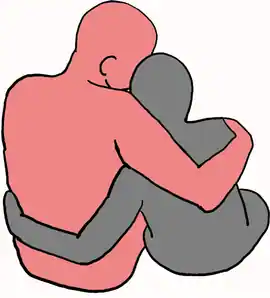
One of the biggest obstacles to learning how to let go is the habit of turning pain inward. When something goes wrong, many people respond with self-blame, harsh judgment, or repeated mental replay of what they “should have done differently.” This is where self-compassion becomes essential.
Research by Kristin Neff at the University of Texas, spanning multiple studies on the Self-Compassion Scale, shows that people who practice self-compassion are better able to release self-criticism and recover from emotional setbacks. Rather than lowering standards, self-compassion reduces emotional rigidity and allows people to move forward with greater clarity.
Self-compassion does not mean excusing harmful behavior or avoiding responsibility. It means recognizing that struggle is part of being human and responding to yourself with the same understanding you would offer someone you care about.
Instead of asking, “Why am I still stuck on this?” you can try asking, “What do I need right now to soften this experience?”
Letting go becomes difficult when inner dialogue remains punitive. Harsh self-talk keeps the nervous system in a defensive state, making release feel unsafe. Self-compassion signals that it is okay to loosen your grip. When the inner environment becomes kinder, attachment loses its urgency.

4) Write a Release Letter You Don’t Send
Sometimes letting go requires expression before release.Thoughts and emotions that remain unspoken tend to recycle internally. Writing gives them a place to land.
Research by James Pennebaker at the University of Texas, through decades of studies on the Expressive Writing Paradigm, shows that writing about difficult experiences helps people process emotions more effectively. The act of putting feelings into words reduces mental load and supports emotional integration.
A release letter is not meant to be edited, shared, or analyzed. Its purpose is simple: to let your inner experience move outward instead of staying contained. You might write to:
- A person
- A past version of yourself
- An experience that changed you
- An expectation that never materialized
There are no rules for tone. Anger, grief, disappointment, relief, everything is allowed. Once written, the key step is closure. You can tear the paper, discard it, or store it somewhere out of sight. The act of letting go of the letter mirrors the emotional release you are practicing internally.
Research on symbolic actions and emotional processing suggests that this sense of completion helps the mind recognize that something has been acknowledged and does not need to be replayed endlessly. Letting go often begins when expression meets closure.
Research Reference
Greater Good Science Center : Forgiveness & Emotional Wellbeing
5) Choose Forgiveness as an Inner Decision
Forgiveness is often misunderstood as approval, reconciliation, or forgetting. In reality, forgiveness is an internal choice about what you continue to carry. When learning how to let go, forgiveness is less about the other person and more about reducing your own emotional burden.
Research from Fred Luskin’s Stanford University Forgiveness Project shows that individuals who practice forgiveness experience lower stress, reduced emotional reactivity, and a greater sense of inner peace over time. The key finding across these studies is that forgiveness benefits the person doing the forgiving, regardless of whether the external situation changes.
Similarly, Everett Worthington’s REACH model of forgiveness emphasizes that forgiveness is a skill, not a feeling. It can be practiced deliberately, even when emotions have not fully resolved.
Forgiveness does not require denying harm. It does not mean continuing unsafe relationships. It simply means deciding not to let past injury dominate your present emotional space. You might frame forgiveness internally as:
- “I release myself from replaying this.”
- “I no longer need this pain to protect me.”
- “I choose peace over punishment.”
Letting go becomes possible when forgiveness is seen as an act of self-preservation, not moral obligation.

6) Loosen Attachment to Old Identities and Outcomes
One of the most subtle barriers to learning how to let go is attachment to who you thought you would be, or how you believed something would turn out. Sometimes the pain isn’t about the event itself. It’s about the identity or future you built around it.
Research by Sahdra and colleagues in the Journal of Personality on the Non-Attachment Scale shows that people who are less attached to outcomes, roles, and self-concepts report greater life satisfaction and lower emotional distress. Non-attachment, in this context, does not mean indifference. It means flexibility. Attachment often sounds like:
- “This had to work for me to be okay.”
- “I don’t know who I am without this.”
- “If I let this go, I lose a part of myself.”
Letting go asks a different question: “What part of me is ready to change?”
When identity becomes rigid, growth feels like loss. When identity is allowed to evolve, release feels like expansion. You don’t have to erase the past version of yourself. You only need to stop letting it dictate who you are allowed to become next. Letting go becomes easier when you permit your identity to be unfinished.
7) Create a Simple Letting-Go Ritual
The mind often understands change more easily through action than through intention alone. This is why rituals can be powerful. Research by Francesca Gino and Michael Norton at Harvard Business School on rituals and psychological closure suggests that symbolic actions help people experience a stronger sense of completion and emotional resolution. When the brain witnesses a physical act that represents an ending, it becomes easier to release mental and emotional loops.
A ritual does not need to be elaborate. Its purpose is to mark a transition. Examples:
- Burning or tearing a written release letter
- Placing an object in the ground or water as a symbol of release
- Lighting a candle with the intention of closing a chapter
- Clearing a small physical space connected to the memory
What matters is meaning, not performance. Choose one simple action. Decide what it represents. Then complete it with presence. Ritual creates a boundary between “what was” and “what is now.” Letting go often becomes real when it is witnessed, even if only by you.

8) Use Gratitude to Gently Shift Focus Forward
Gratitude is often misunderstood as forcing positivity. In the context of learning how to let go, gratitude is not about denying loss or pretending pain did not happen. It is about gradually redirecting attention toward what still exists, what remains supportive, and what continues to hold value in your life.
Research by Robert Emmons and Michael McCullough published in the Journal of Personality and Social Psychology found that regular gratitude practices are associated with increased well-being, improved emotional regulation, and a more balanced outlook. People who engage in gratitude tend to experience less fixation on what is missing and more awareness of what is present.
When we are attached to what we lost, the nervous system stays oriented toward absence. Gratitude slowly trains attention to recognize presence. This does not mean you must feel grateful for what hurt you. It means you allow yourself to notice parallel truths: Something ended. Something still exists. You might begin by acknowledging small, neutral realities:
- A stable place to rest
- A person who listens
- A moment of calm
- A skill you’ve developed
- A part of yourself that survived
Over time, these recognitions create an internal shift. The emotional center of gravity moves away from what is gone and toward what is alive. Letting go often unfolds naturally when attention is no longer anchored exclusively to loss.
Related Reading
The Mental Health Benefits of Gratitude
9) Decide What You’re Making Space For Next
Letting go is incomplete without direction. When something is released, it leaves space behind. If that space remains undefined, the mind often rushes to fill it with familiar patterns, even ones you intended to leave behind. This is why the final step in learning how to let go involves conscious choice.
Research on self-regulation and decision-making by Roy Baumeister and colleagues, alongside mindfulness-based studies, suggests that releasing attachment to past failures or outdated identities improves present-focused thinking. When mental energy is no longer tied up in rumination, people make clearer, more intentional decisions. Letting go is not an emptying process. It is a reorientation. You may find it helpful to reflect on questions like:
- What kind of energy do I want to move toward now?
- What values feel more aligned with who I am today?
- What am I ready to invite in that wasn’t possible before?
These do not require immediate answers. Even naming a direction, rather than a destination, can be enough. Making space does not mean rushing into something new. It means allowing room for choice rather than reaction. When you release what no longer serves you, you regain agency over what comes next. Letting go becomes complete when it is paired with intention.
FAQs
How do I teach myself to let go?
You start by noticing what you’re holding onto and how it’s affecting your life.
Then you practice small, repeatable habits like journaling, self-forgiveness, and observing your thoughts without reacting to them. Letting go isn’t something you master in one moment. It’s a skill built through awareness and repetition.
What is the 3-3-3 rule for stress?
The 3-3-3 rule is a grounding exercise: Name 3 things you can see, Name 3 things you can hear and Move 3 parts of your body. It helps shift attention out of anxious thoughts and back into the present moment.
What are the 5 stages of letting go?
Most people move through these phases: 1.Awareness 2.Acknowledgment 3.Acceptance 4.Release 5.Moving forward. You may revisit stages more than once. That’s normal.
Which step resonates most with you right now?
Share in the comments! I read every one.
Want more gentle, practical tools for growth? Explore the full Self-Discovery Tools collection
1 thought on “How to Let Go Emotionally: 9 Gentle Steps to Release What No Longer Serves You”