
ChatGPT can be more than a productivity tool or writing assistant. When used intentionally, it can help you reflect, identify patterns, and think more clearly about your own behavior. Using the right ChatGPT prompts for self analysis allows you to slow down your thinking and examine your choices without judgment or pressure.
This guide shares the best ChatGPT prompts for self analysis, organized by purpose. These prompts are designed for reflection, self evaluation, and self assessment not therapy or diagnosis. Each prompt is simple, practical, and easy to copy and paste, making self-reflection more accessible and structured.
Table of Contents
How to Use ChatGPT for Self Analysis
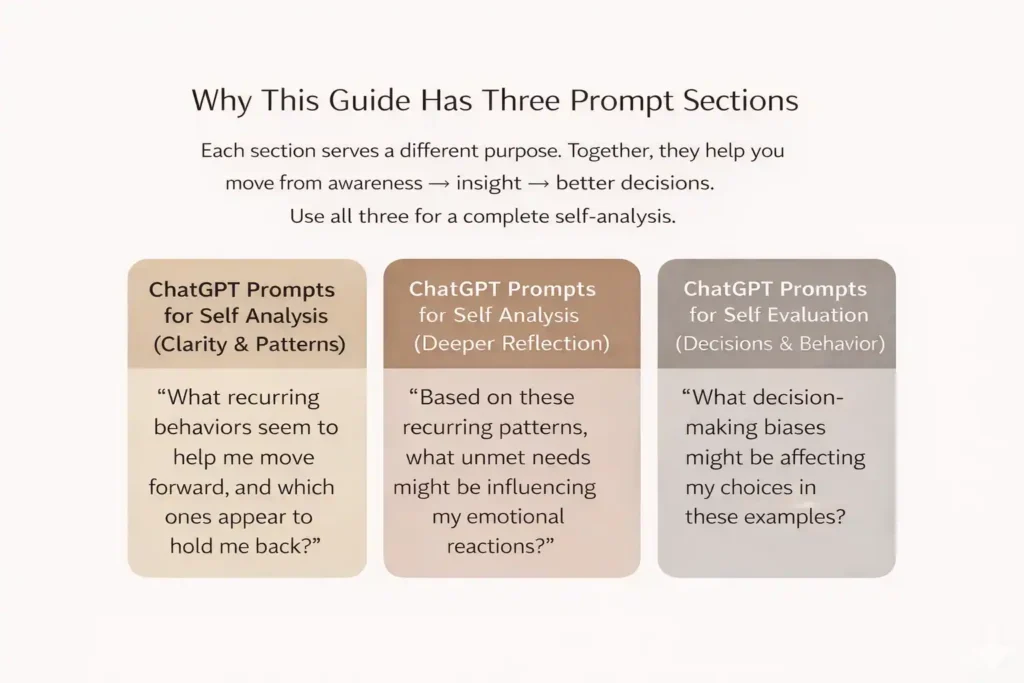
Using ChatGPT prompts for self analysis works best when you approach the tool as a thinking aid, not a source of answers. These prompts are designed to help you slow down, reflect clearly, and notice patterns you might otherwise miss. When used intentionally, the best ChatGPT prompts for self analysis can support clarity, self-awareness, and better decision-making.
What ChatGPT Prompts for Self Analysis Are Useful For
ChatGPT prompts for self analysis are especially useful when you want to:
- Reflect on recurring thoughts, habits, or reactions
- Understand why certain situations trigger you
- Gain perspective on decisions without emotional overload
- Practice structured self evaluation without journaling extensively
Many people use ChatGPT prompts for self evaluation when they feel stuck mentally but don’t know what questions to ask themselves. The prompts act as a framework, helping you organize your thoughts instead of letting them spiral.
Similarly, ChatGPT prompts for self assessment can help you:
- Review recent experiences objectively
- Identify strengths and blind spots
- Clarify what’s working and what isn’t
The value lies in clarity, not diagnosis.
What This Is Not (Important to Understand)
It’s important to be clear about limitations. ChatGPT prompts for self analysis are not therapy.
They are not meant to replace professional mental health support, diagnose conditions, or offer treatment advice.
They are also not meant to:
- Tell you who you are
- Decide what you should do
- Validate every emotional reaction without reflection
The purpose of chatgpt prompts for self evaluation is to help you think better, not to outsource responsibility for your life decisions. When used correctly, the best ChatGPT prompts for self analysis encourage reflection, not dependency.
How to Answer Honestly (So the Prompts Actually Work)
The effectiveness of ChatGPT prompts for self assessment depends almost entirely on how honestly you respond. To get the most out of ChatGPT prompts for self analysis:
- Describe situations factually, not defensively
- Include your reactions, not just events
- Avoid presenting yourself as right or wrong
- Focus on patterns rather than single incidents
For example, instead of asking:
“Why do people always misunderstand me?”
Reframe with a chatgpt prompt for self evaluation like:
“Based on these recent interactions, what communication patterns might be contributing to misunderstandings?”
Honest input leads to clearer output. The more grounded you are in describing your experiences, the more useful ChatGPT prompts for self analysis become.
ChatGPT Prompts for Self Analysis (Clarity & Patterns)
These ChatGPT prompts for self analysis help you identify emotional, behavioral, and thinking patterns without overcomplicating the process. Each prompt is designed to be copied and pasted directly, making them some of the best ChatGPT prompts for self analysis when your goal is clarity rather than overthinking.
Use these chatgpt prompts for self analysis slowly. One or two at a time is enough.
Copy-Paste Prompts for Clarity & Patterns
- Act as an experienced psychologist. Explain the most common emotional patterns people show in everyday life when they are not under stress, and how these patterns shape personality over time.
- From a psychological perspective, explain how people typically distinguish between habits that are genuinely aligned with their nature versus habits they maintain out of obligation or conditioning.
- As a behavioral expert, describe the most common ways people respond when small plans or expectations don’t go as intended, and what these reactions usually reveal about control and adaptability.
- Explain the thinking patterns psychologists most often observe in routine decision-making, and how these patterns influence long-term outcomes without people realizing it.
- From an emotional regulation standpoint, explain why certain emotional reactions become automatic, and how these default responses are formed.
- As a self-assessment expert, describe the typical strengths and blind spots that tend to appear together in people’s behavior, and why strengths often create blind spots.
(Useful as a chatgpt prompt for self evaluation) - Looking at these experiences together, what assumptions do I tend to make that shape my reactions?
- What patterns do you notice in how I handle conflict, discomfort, or difficult conversations?
- Based on this summary, how do my emotional responses differ when I feel secure versus when I feel uncertain?
(Helpful for chatgpt prompts for self assessment) - What recurring behaviors seem to help me move forward, and which ones appear to hold me back?
- From this description, what mindset patterns might be influencing how I interpret situations?
- If you had to summarize the main emotional and behavioral patterns in my recent experiences, what would they be?
These ChatGPT prompts are meant to surface patterns, not provide conclusions. When used regularly, they support clearer self evaluation and more grounded self assessment without turning reflection into rumination.
Best ChatGPT Prompts for Self Analysis (Deeper Reflection)
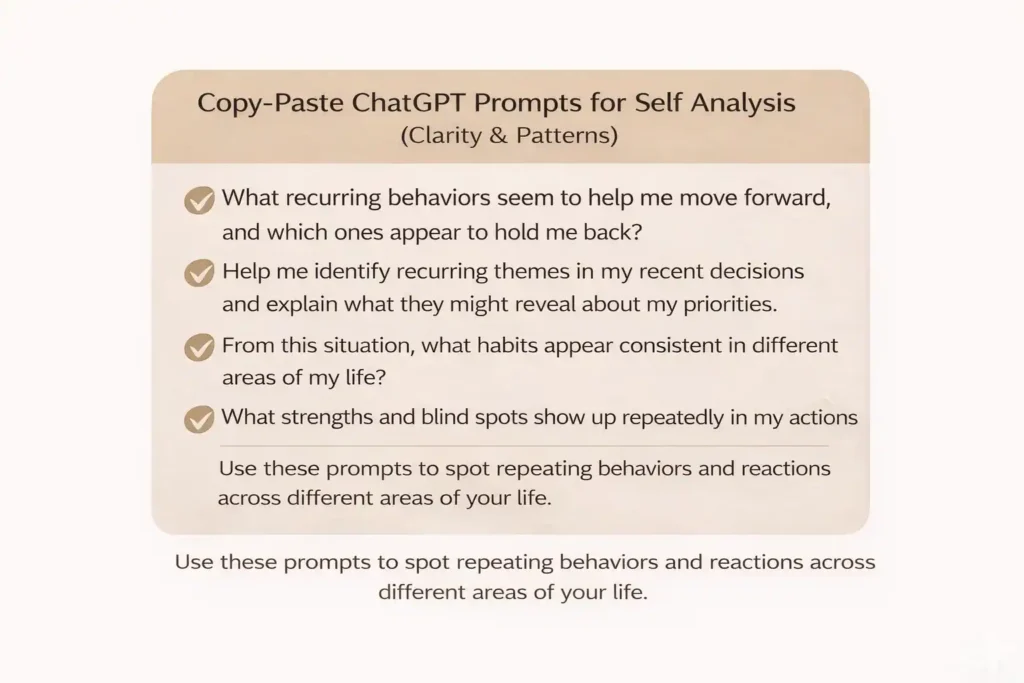
Once you’ve identified surface-level patterns, the next step is deeper reflection. These are the best ChatGPT prompts for self analysis when you want insight, not just observation. They help you understand why patterns exist and how they influence your choices over time.
Use these chatgpt prompts for self analysis when you’re calm and willing to reflect honestly. They are meant for depth, not speed.
Copy-Paste Prompts for Deeper Reflection
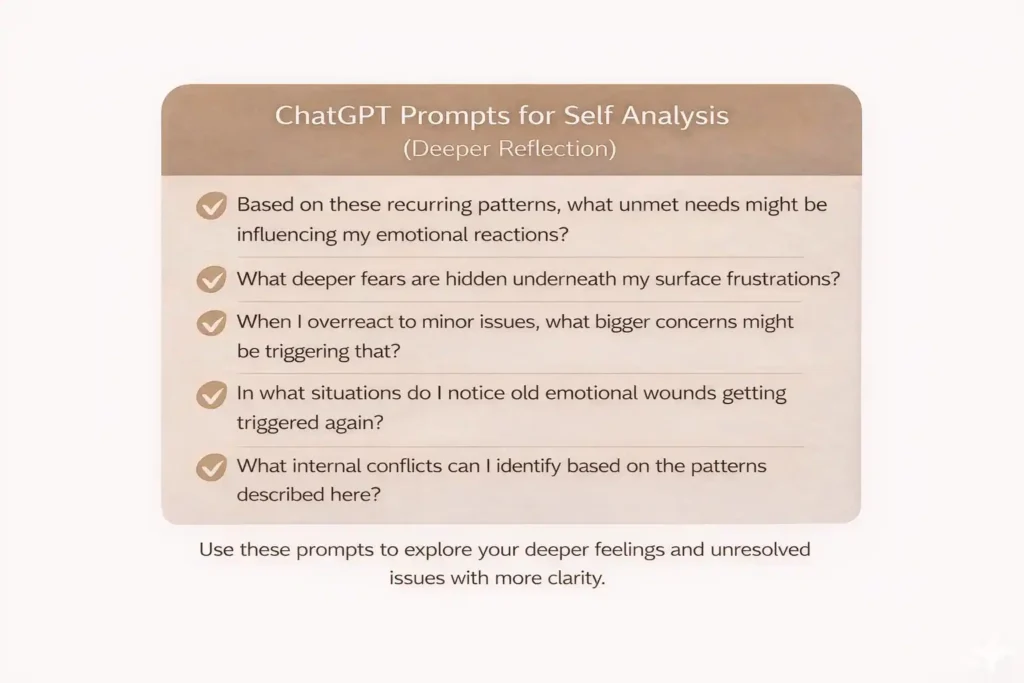
- Based on these recurring patterns, what unmet needs might be influencing my emotional reactions?
(Excellent for chatgpt prompts for self assessment) - Act as a clinical psychologist. Explain the most common unmet emotional needs people carry into adulthood, and how these needs subtly influence emotional reactions over time.
- From a psychological perspective, explain how belief systems about self-worth are typically formed and how they quietly shape behavior and relationships.
- How do my past experiences appear to influence how I interpret similar situations today?
(Strong chatgpt prompt for self evaluation) - As a behavioral expert, describe the most common fears that influence decision-making, even when people believe they are acting rationally.
- Explain how early experiences tend to influence the way people interpret neutral or ambiguous situations later in life.
- What patterns suggest growth, and which suggest avoidance?
- From a depth psychology lens, explain why internal conflicts arise between logic and emotion, and how people usually experience this tension.
- What values seem important to me based on how I react under pressure?
- As an emotional regulation specialist, explain how some emotional responses function as protection mechanisms rather than accurate reflections of reality.
- How does my internal dialogue influence the way I experience these situations?
- What questions should I be asking myself more often based on these recurring behaviors?
Looking for a different lens on self-understanding?
Our ChatGPT prompts for birth chart analysis help you explore personality traits and emotional tendencies through astrology using reflection, not prediction.
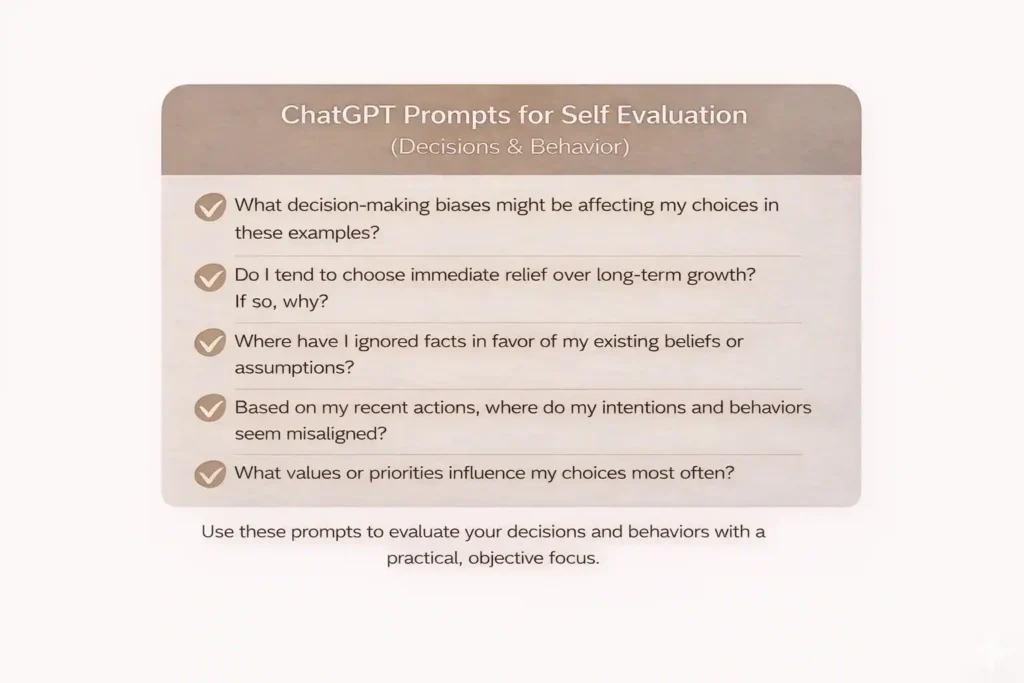
ChatGPT Prompts for Self Evaluation (Decisions & Behavior)
After reflection comes evaluation. These ChatGPT prompts for self evaluation focus on how you make decisions, respond to situations, and follow through on intentions. They help you assess behavior realistically without judgment or emotional overload.
Use these chatgpt prompts for self evaluation when you want to understand what you do, not just what you feel. They also support practical self assessment by connecting insight to action.
Copy-Paste Prompts for Decisions & Behavior
- Act as a behavioral psychologist. Explain the most common patterns people show when they avoid decision-making, and what those patterns usually indicate.
- Based on these examples, how consistent are my actions with my stated values?
(Strong chatgpt prompt for self assessment) - From a cognitive psychology perspective, explain how people often misjudge consistency between their values and their actions.
- Looking at this pattern, where do I tend to hesitate, delay, or avoid taking action?
- As a habit-formation expert, explain which daily behaviors tend to have the biggest long-term impact on outcomes, even when they seem minor.
- From this behavior pattern, what strengths am I relying on most, and which ones might be underused?
- Explain the psychological reasons people delay or hesitate before taking action, even when they know what they should do.
- Based on my recent actions, where do my intentions and behaviors seem misaligned?
- What behaviors appear to support progress, and which ones unintentionally create friction?
(Useful chatgpt prompt for self evaluation) - From a self-regulation standpoint, explain how people typically choose coping strategies, and why some strategies work short-term but fail long-term.
- How do I typically respond when plans don’t go as expected, based on these situations?
- What small behavioral adjustments could improve consistency or clarity in similar situations?
How Often Should You Use Self-Analysis Prompts?
One of the biggest mistakes people make with self-reflection tools is overuse.
Here’s a healthier approach:
- Avoiding overthinking: If you notice yourself analyzing the same issue repeatedly, it’s time to pause. Insight loses value when it turns into rumination.
- Use prompts weekly, not obsessively: Once or twice a week is enough for most people. This keeps chatgpt prompts for self analysis useful without becoming mentally exhausting.
- Know when to stop analyzing and act: When a prompt gives you clarity on what needs to change, the next step is action, not more reflection.
This balance helps ensure the post remains informational and practical, rather than drifting into mental-health advice territory.
Final Note on Responsible Self-Reflection
ChatGPT works best as a mirror, not an authority.
These prompts are designed to surface patterns, not diagnose problems or replace professional guidance. Insight should feel clarifying, not heavy or consuming.
If reflection starts to feel circular or emotionally draining, that’s a signal to step back. The purpose of self-analysis is understanding, not self-criticism.
Used responsibly, chatgpt prompts for self analysis, self evaluation, and self assessment can support awareness, decision-making, and growth without turning introspection into obsession.
FAQs
Scary questions to ask ChatGPT about yourself
“Scary” questions aren’t about fear. They’re about honesty. These are questions that surface blind spots, patterns you may be avoiding, or behaviors you rationalize without noticing. When used carefully, they help you see yourself more clearly, not judge yourself. The key is to treat the answers as insight, not identity.
Funny ChatGPT prompts about yourself
Funny prompts are a surprisingly effective way to build self-awareness without emotional heaviness. Humor lowers defensiveness and helps you notice habits, contradictions, or quirks in a lighter way. These prompts are great for balance, self-reflection doesn’t always have to feel intense to be useful.
4 thoughts on “23+ Best ChatGPT Prompts for Self Analysis”