
Anxiety doesn’t always arrive as panic or obvious fear. For many people, it shows up quietly as constant worrying, restless thoughts, a tight body, or a sense that something is always slightly off. When that becomes familiar, the search usually isn’t for explanations, it’s for coping skills for anxiety that can be used in real life, in the middle of ordinary days.
This post brings together 10 coping skills for anxiety that are practical, simple, and adaptable. These aren’t techniques meant to suppress emotions or force positivity. They are tools that help you calm your nervous system, interrupt anxious thinking patterns, and respond to anxiety with more awareness and control over time.
You don’t need to use all of them, and you don’t need to use them perfectly. Even practicing a few coping skills consistently can reduce how overwhelming anxiety feels and make it easier to move through daily situations without feeling constantly on edge.
If anxiety makes your mind loop, structured reflection can help you regain clarity without spiraling.
Read: 23+ Best ChatGPT Prompts for Self AnalysisTable of Contents
What Are Coping Skills for Anxiety?
Coping skills for anxiety are simple, practical actions you can use to steady your mind and body when anxiety shows up. They don’t make anxiety disappear forever, and they’re not meant to suppress what you’re feeling. Instead, they help you respond to anxious thoughts, physical tension, and emotional overwhelm in a way that keeps the situation from escalating.
Many people assume coping skills are only for moments of panic, but in reality, the best coping skills for anxiety are often used before things feel unmanageable. They work by helping your nervous system shift out of constant alert mode, giving your mind enough space to think more clearly and your body a chance to relax. Over time, this reduces how intense and disruptive anxiety feels.
It’s also important to understand that coping skills for anxiety aren’t about “doing it right.” There isn’t one correct method, and what works well for one person may feel unhelpful for another. Some coping skills focus on breathing or the body, others on attention or thought patterns, and many work best when used consistently rather than only during high-stress moments.
In short, coping skills for anxiety are tools, not cures. They help you manage anxiety in real time, build emotional resilience, and regain a sense of control when anxious feelings start to take over. The goal isn’t to eliminate anxiety completely, but to learn how to live with it in a way that feels more manageable and less overwhelming.
10 Coping Skills for Anxiety
If you’ve been wondering what are some coping skills for anxiety, the list below focuses on tools that can actually be used in everyday situations. This is not about fixing anxiety or eliminating it completely. These are coping skills for anxiety that help reduce intensity, interrupt spirals, and make anxious moments easier to handle.
Think of this as a list of coping skills for anxiety you can return to over time. You don’t need all ten. Even one or two, practiced consistently, can make a noticeable difference.
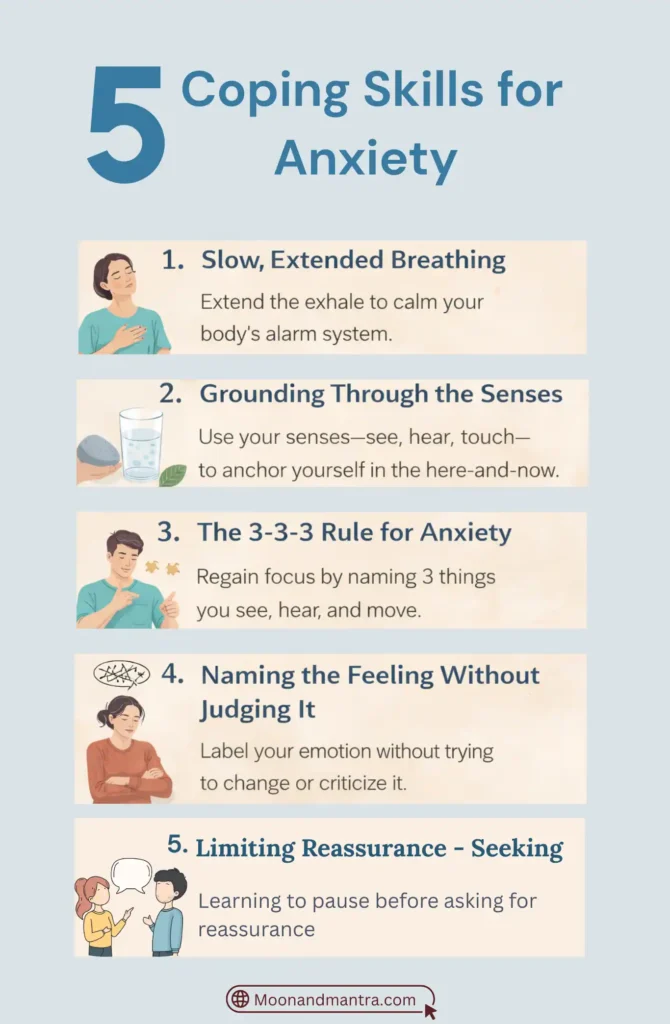
1. Slow, Extended Breathing
One of the most reliable coping skills for anxiety is slowing the breath, especially the exhale. Anxiety naturally shortens breathing and keeps the body in a state of alert. Extending the exhale signals safety to the nervous system and helps the body settle. This is most effective when practiced regularly, not only during peak anxiety.
2. Grounding Through the Senses
When anxious thoughts pull you into the future, grounding brings attention back to the present. Using your senses what you can see, hear, or physically touch helps interrupt mental loops. This is one of the simplest coping skills for anxiety because it doesn’t require changing your thoughts, only redirecting attention.
3. The 3-3-3 Rule for Anxiety
The 3-3-3 rule is a practical way to regain focus when anxiety feels overwhelming. You name three things you can see, three sounds you can hear, and move three parts of your body. This coping skill for anxiety works by anchoring your awareness in the present moment instead of the anxious narrative.
4. Naming the Feeling Without Judging It
Anxiety often grows when emotions are pushed away or criticized. Simply naming what you’re feeling without trying to fix it can reduce its intensity. This coping skill for anxiety helps create distance between you and the emotion, making it easier to respond instead of react.
If anxious thoughts keep replaying the same “what if” scenarios, this next read will help.
Read: How To Stop Overthinking A Lot Without Suppressing Feelings5. Limiting Reassurance-Seeking
Repeatedly seeking reassurance can temporarily soothe anxiety but often strengthens it long term. Learning to pause before asking for reassurance is one of the more subtle coping skills for anxiety. It builds tolerance for uncertainty, which is often at the root of anxious thinking.
6. Gentle Movement
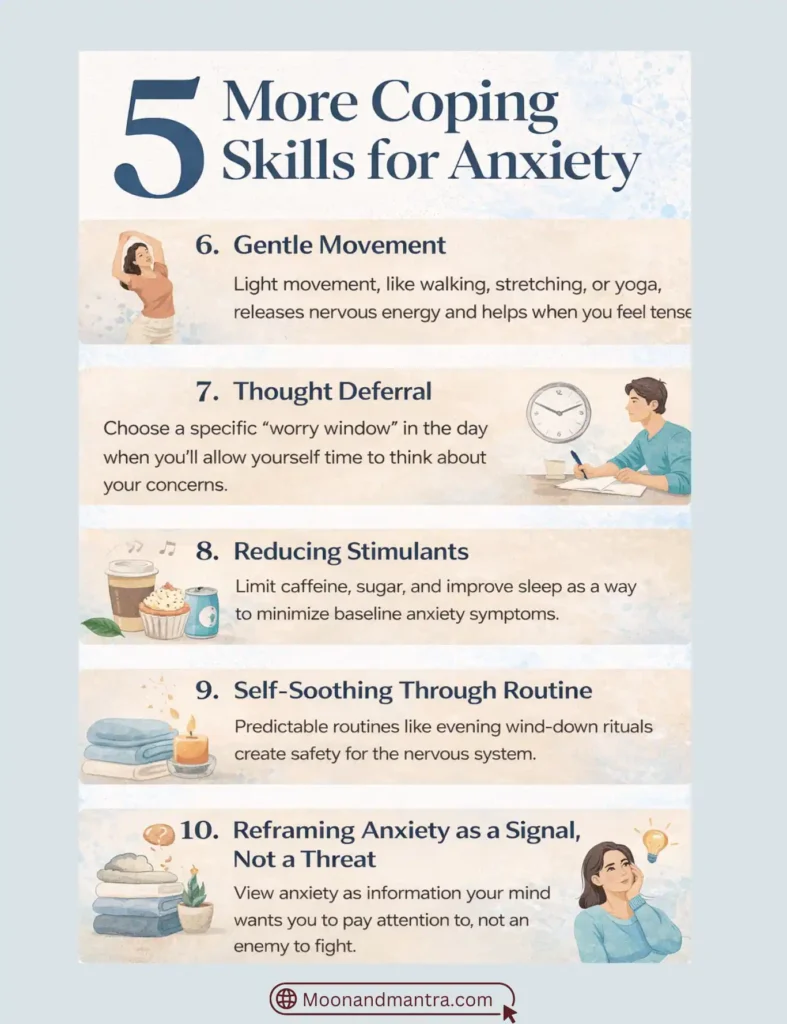
Anxiety is not only mental; it’s physical. Light movement such as walking, stretching, or slow yoga helps release excess nervous energy. This coping skill for anxiety works especially well when your body feels tense, restless, or stuck in fight-or-flight mode.
7. Thought Deferral
Instead of trying to stop anxious thoughts, you postpone them. Choosing a specific “worry window” later in the day reduces how much anxiety dominates your attention. This is a practical coping skill for anxiety that respects the mind’s need to process without letting it take over constantly.
8. Reducing Stimulants
Caffeine, sugar, and lack of sleep can amplify anxiety symptoms. Adjusting these is often overlooked in lists of coping skills for anxiety, yet it can have a significant impact on baseline anxiety levels.
9. Self-Soothing Through Routine
Predictable routines create a sense of safety for the nervous system. Simple habits like consistent meal times, evening wind-down rituals, or regular check-ins with yourself can serve as long-term coping skills for anxiety.
10. Reframing Anxiety as a Signal, Not a Threat
Instead of viewing anxiety as something to fight, reframing it as information can reduce fear around it. This coping skill for anxiety doesn’t eliminate discomfort, but it changes your relationship with it, making anxiety feel less overpowering.
This list of coping skills for anxiety isn’t meant to be followed rigidly. The most effective approach is to notice which coping skills feel accessible to you and practice them consistently, especially on calmer days.
How to Use These Coping Skills Without Overthinking Them
One of the most common mistakes people make with coping skills for anxiety is trying to use too many at once, especially when anxiety is already high. When that happens, the tools themselves can start to feel like another task to manage, which only adds to the sense of overwhelm.
The most effective way to use coping skills for anxiety is to choose one or two that feel manageable and practice them regularly, even on days when anxiety is low. This builds familiarity and makes the skills easier to access when anxious thoughts or physical symptoms appear. Coping skills work best as habits, not emergency fixes.
It’s also helpful to let go of the idea that coping skills should immediately “make anxiety go away.” Anxiety often reduces gradually, not instantly. When you expect quick relief, you may start monitoring your anxiety too closely, which keeps attention locked on it. Using coping skills for anxiety with a lighter touch without constantly checking whether they are working allows your nervous system to settle more naturally.
If you notice yourself switching rapidly from one technique to another, pause. That usually means the mind is searching for certainty rather than regulation. In those moments, returning to something simple, like steady breathing or gentle movement, is often more effective than adding new strategies.
Ultimately, coping skills for anxiety are meant to support you, not become another source of pressure. When used with patience and consistency, they help anxiety feel more manageable over time without turning self-care into another thing to get “right.”
If you want a clear, non-alarmist overview of anxiety symptoms and support options, the National Institute of Mental Health’s guide to anxiety disorders is a solid reference.
When Coping Skills Help and When to Seek Extra Support
Coping skills for anxiety can be very effective in helping you manage anxious thoughts, physical tension, and emotional overwhelm, especially when anxiety shows up in daily situations. For many people, regularly using coping skills for anxiety reduces how intense symptoms feel and makes it easier to function without feeling constantly on edge.
However, it’s also important to recognize what coping skills are meant to do and what they aren’t. Coping skills for anxiety are tools for management and support. They help you respond differently to anxiety, but they don’t replace professional care or address every underlying cause on their own.
If anxiety feels constant, begins interfering with work, relationships, or sleep, or feels increasingly difficult to manage despite using coping skills for anxiety consistently, seeking additional support can be an important next step. Speaking with a qualified mental health professional can help you explore deeper patterns and receive guidance tailored to your situation.
Reaching out for support doesn’t mean coping skills have failed. It simply means your anxiety may need more structured or personalized care. Coping skills for anxiety can still be part of that process, working alongside professional support rather than being the only resource you rely on.
FAQs
What’s the best way to cope with anxiety?
There isn’t one single best way to cope with anxiety, because anxiety shows up differently for everyone. For most people, the most effective approach is using a few coping skills for anxiety consistently rather than searching for a perfect technique. Simple tools like steady breathing, grounding, or gentle movement tend to work best when practiced regularly, not only during moments of high stress.
How to deal with constant anxiety?
When anxiety feels constant, it often helps to focus on daily regulation rather than quick fixes. Coping skills for anxiety are most effective when they become part of your routine, supporting your nervous system over time. If anxiety continues to feel overwhelming or begins to interfere with daily life, combining coping skills with professional support can provide deeper and more sustainable relief.
How to stop anxious thoughts?
Trying to force anxious thoughts to stop usually makes them stronger. A more helpful approach is learning how to shift attention without judging the thoughts themselves. Coping skills for anxiety such as grounding techniques, thought deferral, or naming the emotion can reduce how much anxious thoughts dominate your focus, even if they don’t disappear completely.
1 thought on “10 Coping Skills for Anxiety That Actually Help in Daily Life”